

Pond Critters
Week of August 23, 2026 – August 29, 2026
by Anna Stunkel, Environmental Educator
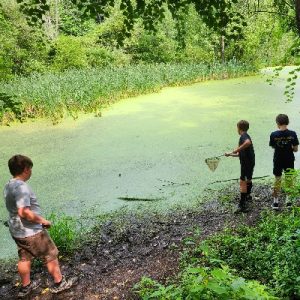
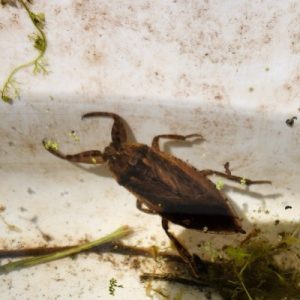
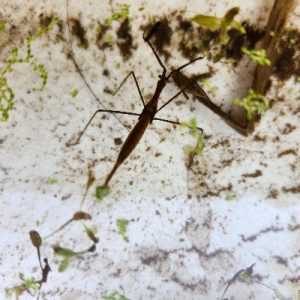
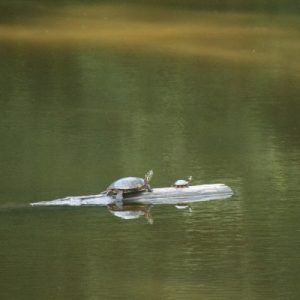
This summer has been literally hopping with all kinds of animals at the pond! Each week, campers have been excitedly catching macroinvertebrates, turtles, and amphibians of all shapes and sizes. It seems to be an especially good year for Water Scorpions and Giant Water Bugs. Campers love to hear about these animals’ adaptations that help them to eat, move, and breathe. For example, did you know that dragonfly nymphs move by shooting air out of their rear ends? This always gets a laugh from the kids! Various water beetle species, Backswimmers, and Water Boatmen carry air bubbles underwater like tiny scuba tanks to help them breathe. Water Scorpions may look like sticks, but they are fierce predators with mantis-like front legs to grab unsuspecting prey.
If I have a camp group that’s calm and especially interested in creatures, I will take a moment at the end of a pond catching session to bring each kind of animal around in a jar and share some fun facts. In many cases, the kids have already heard some of these things and they enjoy sharing their knowledge with the group. A couple weeks ago, I had several preschoolers who called themselves scientists throughout the week. I shared with them that we can tell the health of the pond based on what kinds of animals live here. We found some mayfly nymphs that can only live in healthy water, so that’s a good sign! They recorded this in their imaginary notebooks.
The pond is a magical place to spark kids’ interest in creatures. There’s a special combination of hands-on experience and a great diversity of animals to see and learn about. Thinking back to my own childhood, being outside and catching animals like frogs and water bugs is what really got me interested in nature. While books and tv shows played some role, there is no substitute for seeing creatures up close and learning to handle them with care. And with so many different animals to find, it’s exciting to look forward to each net scoop and wonder what we might discover next. Having adults like camp counselors and family members role model how to be kind to creatures and share their knowledge can also be an unforgettable memory for kids.
The pond is a fun place for people of all ages to visit, too. Take a stroll up from the lower parking lot and see what you might find. There are new surprises every day!
We invite our members to enjoy a weekly blog written by our naturalists. Every blog will be uniquely different but always inspired by nature. We may share a memory from a recent hike at The Woods or teach you about an animal or plant that lives on the preserve. No matter the topic, we will be sharing with you our passion for nature and celebrating the connections we all have to the natural world. Each blog will be connected to a weekly set of activities and ideas to help you put nature in your hands, even if you’re at home!